













// We are Elites

Together, we thrive

To Innovate For Share With Inspire Connect

The Community of Rwanda

// Team Members
  • Golden Sash Munyankindi

    Tech Contact/Developer My name is Golden Sash Munyankindi, I am an Enthusiastic software developer with a strong academic foundation in software development. Eager to apply my fresh knowledge of coding languages, algorithms, and software engineering principles to real-world projects. Passionate about creating efficient and user-centric solutions
  • Mugabe Innocent Charles

    Coordinator I am a visionary leader fueled by passion for Enterpreneurship and Leadership. My relentless drive and expertise propel my team to develop revolutionary solutions, shaping Rwanda and inspiring the next generation of Entrepreneurs.
  • Emmanuel Chibuikem Ngwoke

    Graphics designer I am entrepreneur driven by a profound passion for systems engineering. With a keen eye for optimization and problem-solving prowess, Through innovation and dedication, My aim is to transform industries, pioneering efficiency and reliability in the digital landscape, shaping the future of technology.
  • Umukundwa Nadege

    Researcher My name is Nadege Umukundwa, I am an ALU student aspiring to become an entrepreneur in the future.
  • Akariza Kevine

    Secretary I am a dynamic entrepreneur with a fervent love for videography. Armed with creativity and business acumen, My passion fuels me to craft compelling visual stories, elevating brands and capturing life's moments. I am a trailblazer, shaping the future of visual storytelling.
  • Ingabire Angel

    Spokesperson My name is INGABIRE Angel and am very passionate about poetry and discovering new sceneries through books. I have a deep desire to explore innovation and technology to create jobs and create employment opportunities while mantaining efficiency in the work force
// AGRIAID


// E-Lab Challenges
// ELITES E-Lab Work Book 2024
  • "Our think tank mission is to introduce innovative and creative ideas combined with our technical skills that enable agriculture sector in Rwanda to minimize the grand challenge of climate change. "

  • "According to RDB, 70% of Rwandan population depends on farming to make a living. However, Agriculture in Rwanda is facing a big problem because of the issue of climate change. Rainfall is no longer regular, and temperatures keep changing. Soil quality is getting worse, which affects more than 30% of the land that can be farmed, making it harder to grow food. Temperature changes also harm crops and animals, making food shortages more common. These challenges can be addressed and minimized through technology."

  • Problem Description: problem of climate change in Rwanda and its effect on agriculture in Rwanda.

    First Why: why is climate change affecting agriculture in Rwanda?
    Response: "Because of dynamic weather conditions like irregular rainfall and temperature rising which disrupts the farming cycle of farmers and reduces crop outputs."

    Second Why: why are there dynamic weather conditions in Rwanda?
    Response: "This is as a result of the rising of the global average temperature which affects geographical climate system and weather conditions as well."

    Third Why: why is the global average temperature rising?
    Response: "It is rising because of the accumulation of green house gases in the atmosphere which traps heat and prevents it from escaping into space."

    Fourth Why: Why is green house gases accumulating in the atmosphere?
    Response: "Basically because of human activities such as usage of fossil fuels to generate energy, deforestation1for urbanization and other economic acttivities."

    Fifth Why: why are humans engaging in burning of fossils and deforestation.
    Response: "Because there is a heavy reliance on fossil fuel for energy especially in rural areas who uses traditional sources of energy fire woods, charcoal and high demnad of economic development."

  • POLITICAL

    Rwanda is the least country in corruption in EAC and the 4th in Africa which will help farmers in doing their activities when they are more secure

    "According to African union report of 2023, Rwanda is the safest country in Africa and this gives farmers a good place to perform their activities in a safe environment when you are in safe country as afarmer your activities develops According to world bank, Rwanda ranks 4th best investment destination in Africa and this is of a good advantage to a farmer who want to invest in Rwanda According to RDB, It takes 24 hours to resgister business and this service is provided online this will help farmers to register their business online. Eg Agri-business "


    ECONOMIC

    e.g. economic growth, exchange rate, interest rate, inflation rate, unemployment rate...

    "According to the International food policy Research Institute, Access to markets plus the demand for agriculture products play a crucial role,basing on the market access,it influences farmers to sell their goods, more as they are influenced by the transportation and the infrastructures available. so since also the consumers demand for agriculture products is high, it influences the agriculture sectors to sell effectively. According to world bank, kigali, February 28, 2024 - Rwanda’s economy grew at 7.6% in the first three quarters of 2023 despite a challenging global environment and the recent floods that destroyed agricultural produce and infrastructure in April-May 2023. This is according to the 22nd edition of the Rwanda Economic Update (REU): Mobilizing Domestic Savings to Boost the Private Sector in Rwanda. The report adds that the services sector, sustained domestic demand, and the rebound of the industrial sector, contributed to the robust growth and the positive economic trajectory.Based on these estimates, 48.8 percent of the population in Rwanda (6,572 thousand people in 2021) is multidimensionally poor while an additional 22.7 percent is classified as vulnerable to multidimensional poverty (3,055 thousand people in 2021). RWANDA is named by the world bank to be one of afruica's fast growing economy countries."


    SOCIAL

    e.g. population growth, age distribution, lifestyle attitudes, cultural barriers...

    A bigger number of Rwanda's population lives in rural areas and depends on agriculture for their livelihoods. Rwandan cuisine is based on local staple foods that are rooted in agriculture. During ceremonies and social gatherings, traditional food plays a central role.


    TECHNOLOGICAL

    e.g. technological incentives, level of innovation, R&D activities...

    "According to MINICT In Rwanda there's Presence of stable internet connection which will facilitate farmers and veternaries to make research Presence of digital platforms which can boost market access government programs like NKUNGANIRE which will help farmers to get seeds and industrial manure Presence of smart irrigation systems that will optimize water usage, reduce waste, and ensure crops receive the right amount of water at the right time"


    LEGAL

    e.g. consumer protection laws, copyrights and patents...

    "land act law: An Act to provide for the tenure, ownership and management of land, to amend and consolidate the law relating to tenure, ownership and management of land; and to provide for other related or incidental matters. Food and drugs law: The Food and Drug Act prohibited interstate commerce in misbranded and adulterated foods, drinks, and drugs. While it has since been repealed, new laws regulate a wide range of consumer products. This Law establishes Rwanda Food and Drugs Authority and determines its mission, organization and functioning. Consumer protection law: Consumer protection laws offer an important part of a reliable market economy. While “buyer beware” was once the motto of the free market, these regulations help keep sellers honest, with no threat of unpleasant surprises. National environmental law: This Law determines modalities for protecting, conserving and promoting the environment against climate change. Environmental law refers to a variety of protections which share the goal of protecting the environment. some of the laws in the Rwandan state; investment promotion and facilitation;some of the other laws regarding doing bussiness in rwanda is that if the type of company or bussiness is alredy being operated. you can not start it forexample rice manufacturing bussineses And if you are to set up a bussiness 70% of the labour force should be local citizens."


    ENVIRONMENTAL

    e.g. environmental policies, pressures from NGOs...

    Rwanda places a strong emphasis on environmental sustainability by adopting eco-friendly practices for the compliance of the habitants. National fund for environment(FORNERWA): This is rwandas environment and climate change fund established to support the implementation of of projects that contribute to environmental sustainability and climate resilience. Ban on single use plastic: According to kigali city council waste management report 2020 rwanda country banned the use of plasic bags in 2008 and extended the ban to include single use plastics in 2019 to reduce plastic pollution and promote the use of sustainable ideas. UNICEF, rwanda water and sanitartion Report 2020: Rwanda aims to provide universal access to clean water by 2024. As of 2020, around 87% of the population had access to improved drinking water sources.


  • Farmers: Smallholder farmers in Rwanda depend heavily on natural rainfall to water their crops. This makes them highly vulnerable to unpredictable weather patterns caused by climate change.

    Agro-pastoralists: Agro-pastoralists in Rwanda combine crop farming with livestock rearing. They face challenges as climate change reduces pasture quality and water availability for their animals.

    Urban residents: Urban residents in Rwanda experience rising food prices because of farming disruptions. Climate change affects crop production, making food more expensive and less available in cities.

  • "Impact of Climate Change on Farming

    1. Effects on Harvest Quantity General Observation: Harvest quantity of crops has been significantly reduced due to unpredictable and extreme weather patterns. Specific Example: One farmer reported a decrease in bean harvest from 400 kg to 250 kg.

    2. Influence on Crop Yield and Livestock Health General Observation: Prolonged droughts, inconsistent rain patterns, and extreme weather events have led to soil erosion, crop damage, and livestock deaths. Specific Examples: Maize and sorghum planted in March were erased by heavy rains in April. Low productivity of crops has led to insufficient food supply for farmers' families and markets.


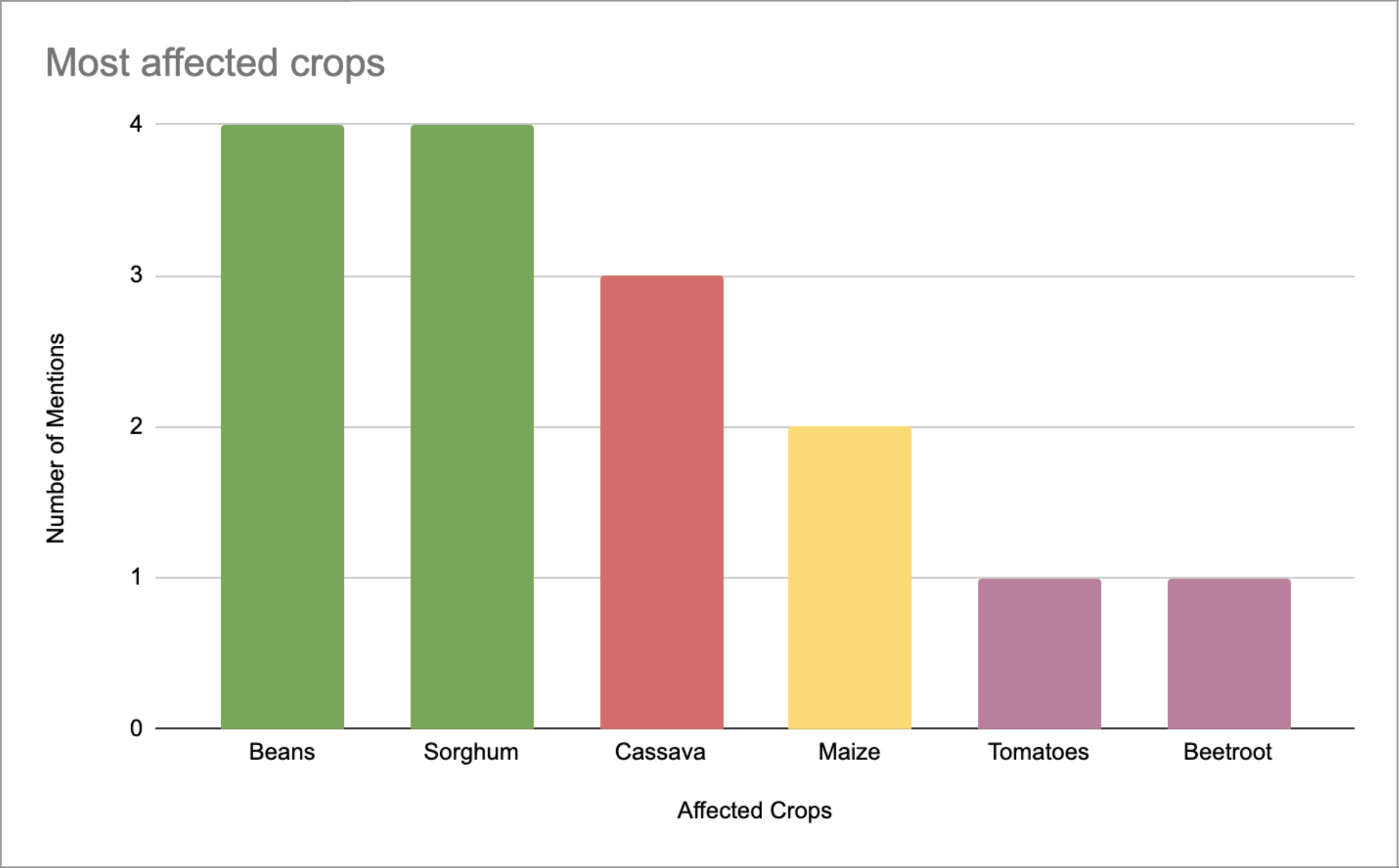
    3. Most Affected Crops and Livestock Crops, Beans, Sorghum, Cassava, Maize, Tomatoes, Beetroot, Livestock: Deaths due to unpredictable weather conditions, particularly during prolonged droughts and extreme weather events.

    4. Financial Impact on Farmers General Observation: Decreased production leads to lower income, causing financial instability. Specific Examples: One farmer reported a loss of 150,000 RWF due to reduced bean harvest. Another farmer mentioned that low productivity led to insufficient income to repay loans, resulting in negative profits."


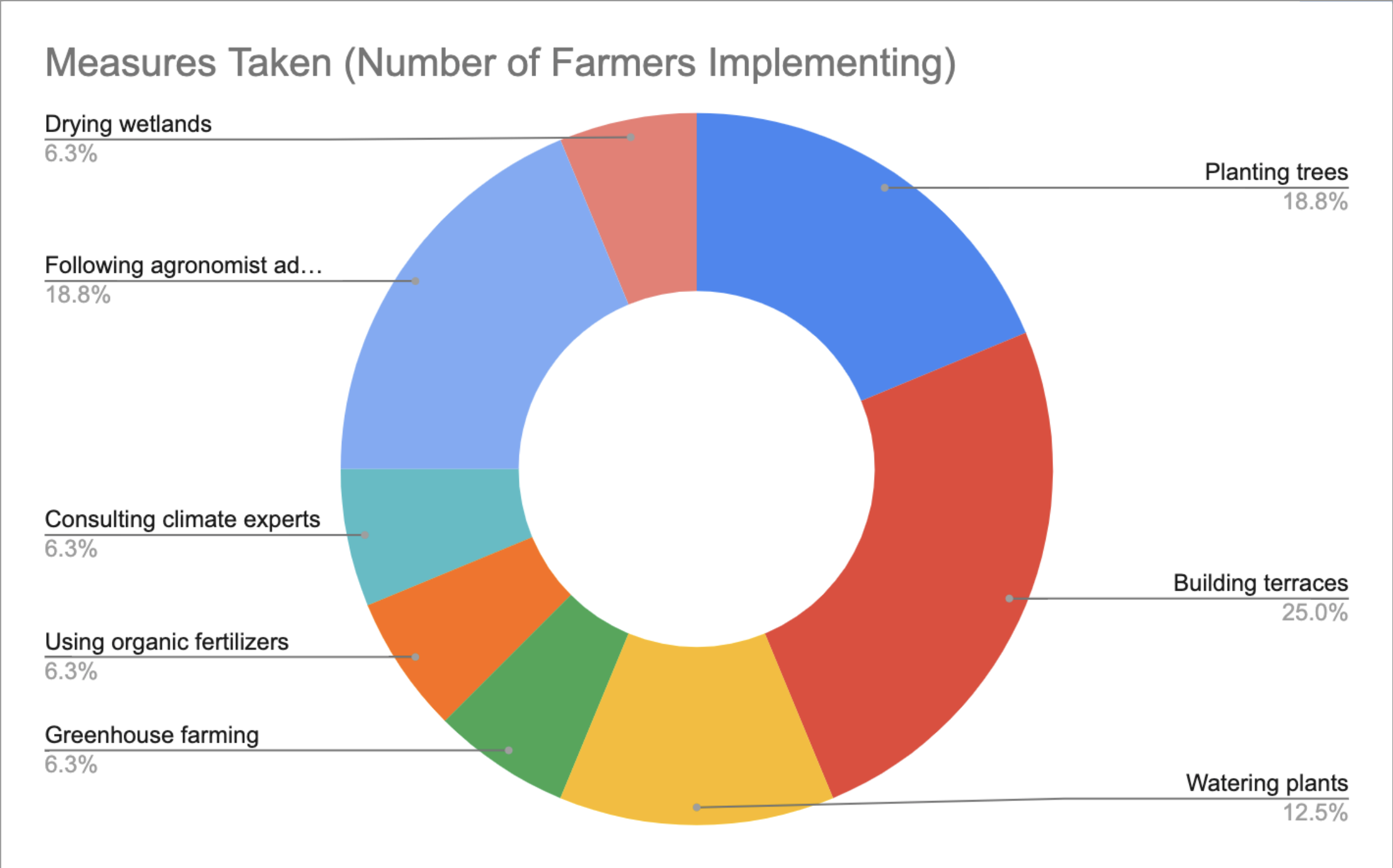
    "5. Measures Taken to Manage Climate Planting trees to prevent soil erosion. Building and maintaining terraces on farms. Water Management: Watering plants during dry seasons. Implementing greenhouse farming if support is available. Using organic fertilizers. Consulting climate experts. Listening to agronomists' advice using seeds suited for climate resilience. Drying wetlands to reclaim farming areas."


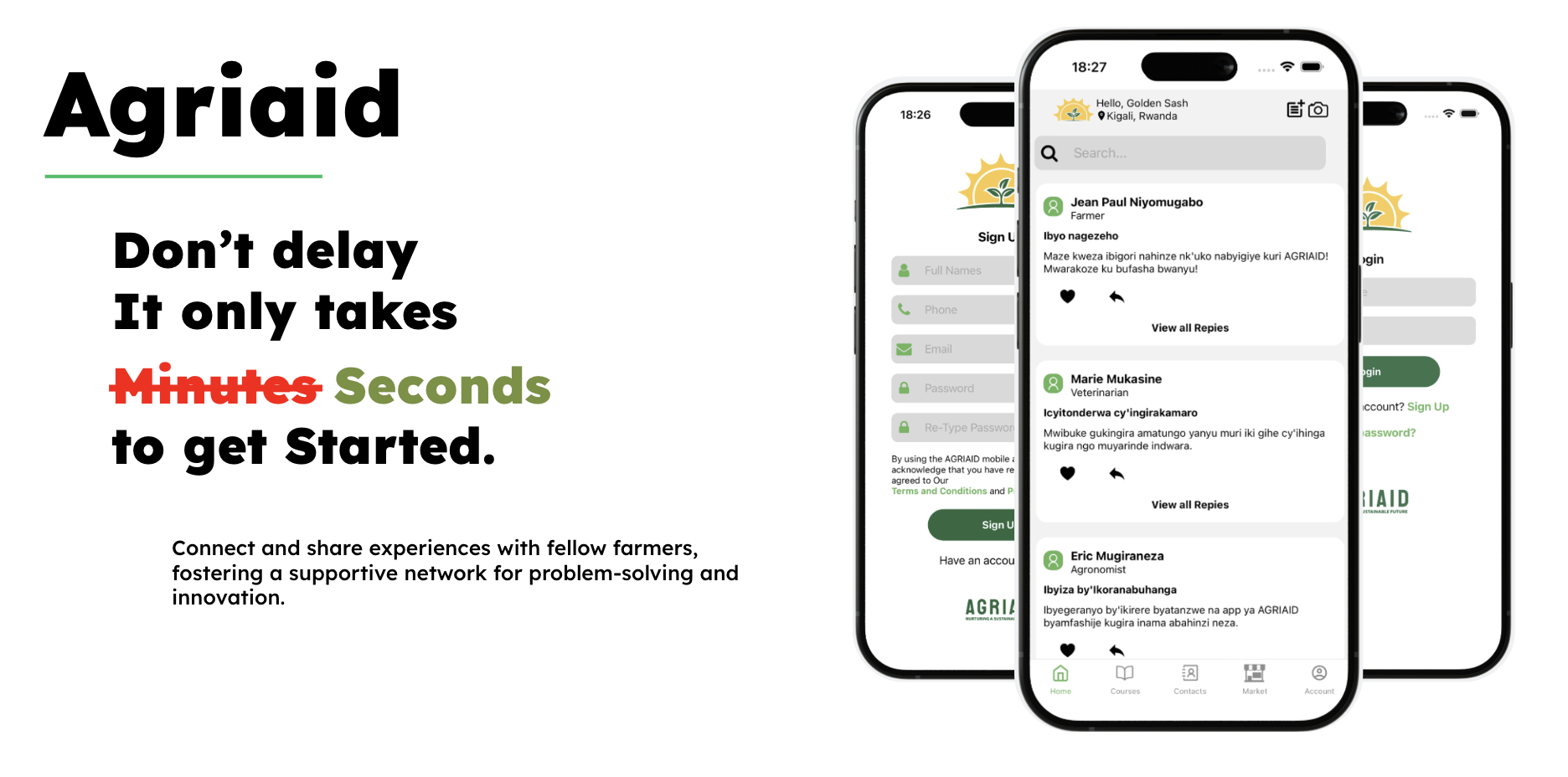
  • AgriAid

    Agriculture is one of the most vulnerable sectors to the impacts of climate change. Farmers face unpredictable weather patterns, declining soil health, water scarcity, and increased pest and disease pressures. These challenges threaten food security and the livelihoods of millions, especially in regions like Rwanda. There is an urgent need for innovative solutions that help farmers adapt to climate change, improve productivity, and promote sustainable practices.

    Solution:
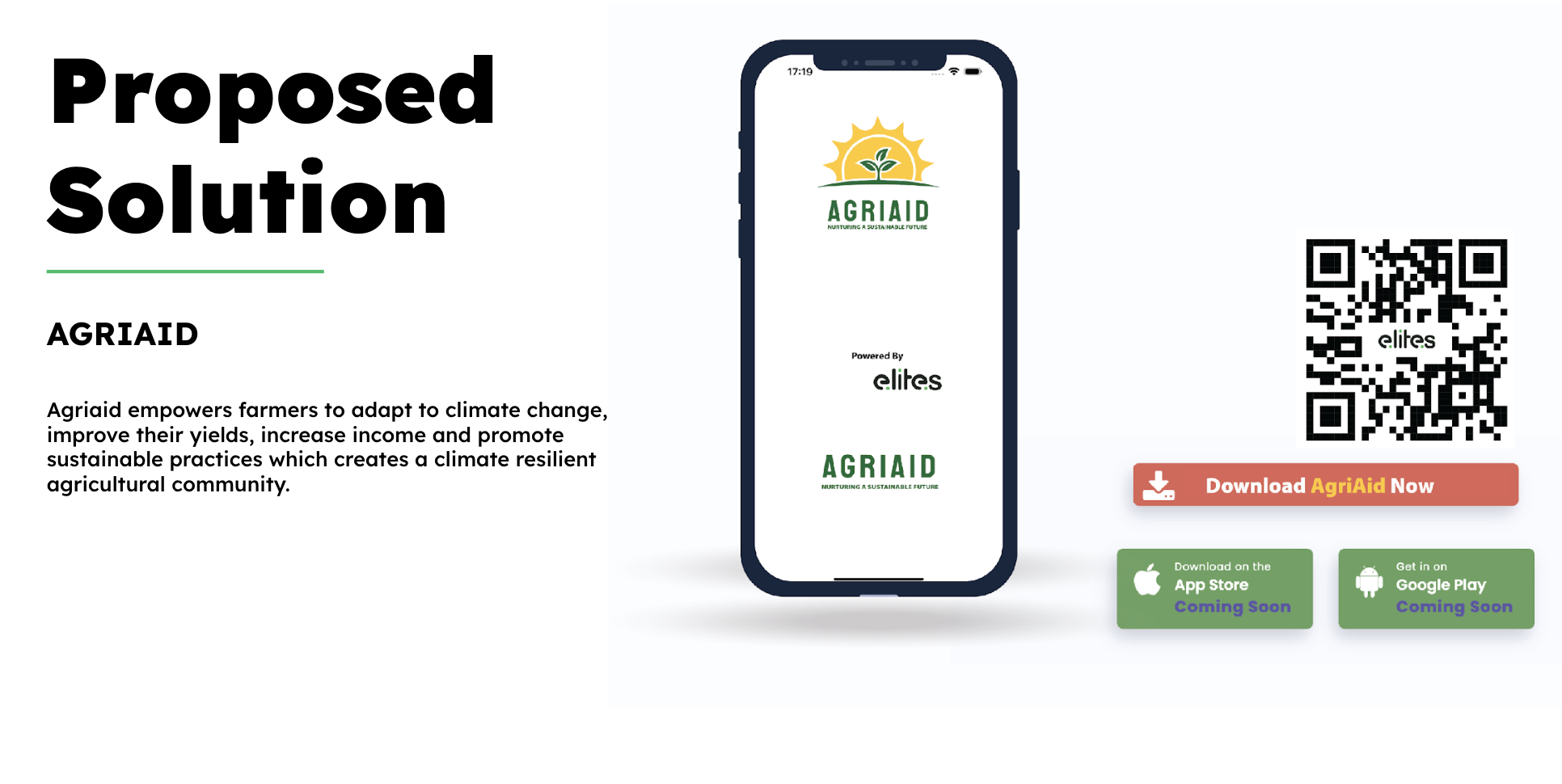
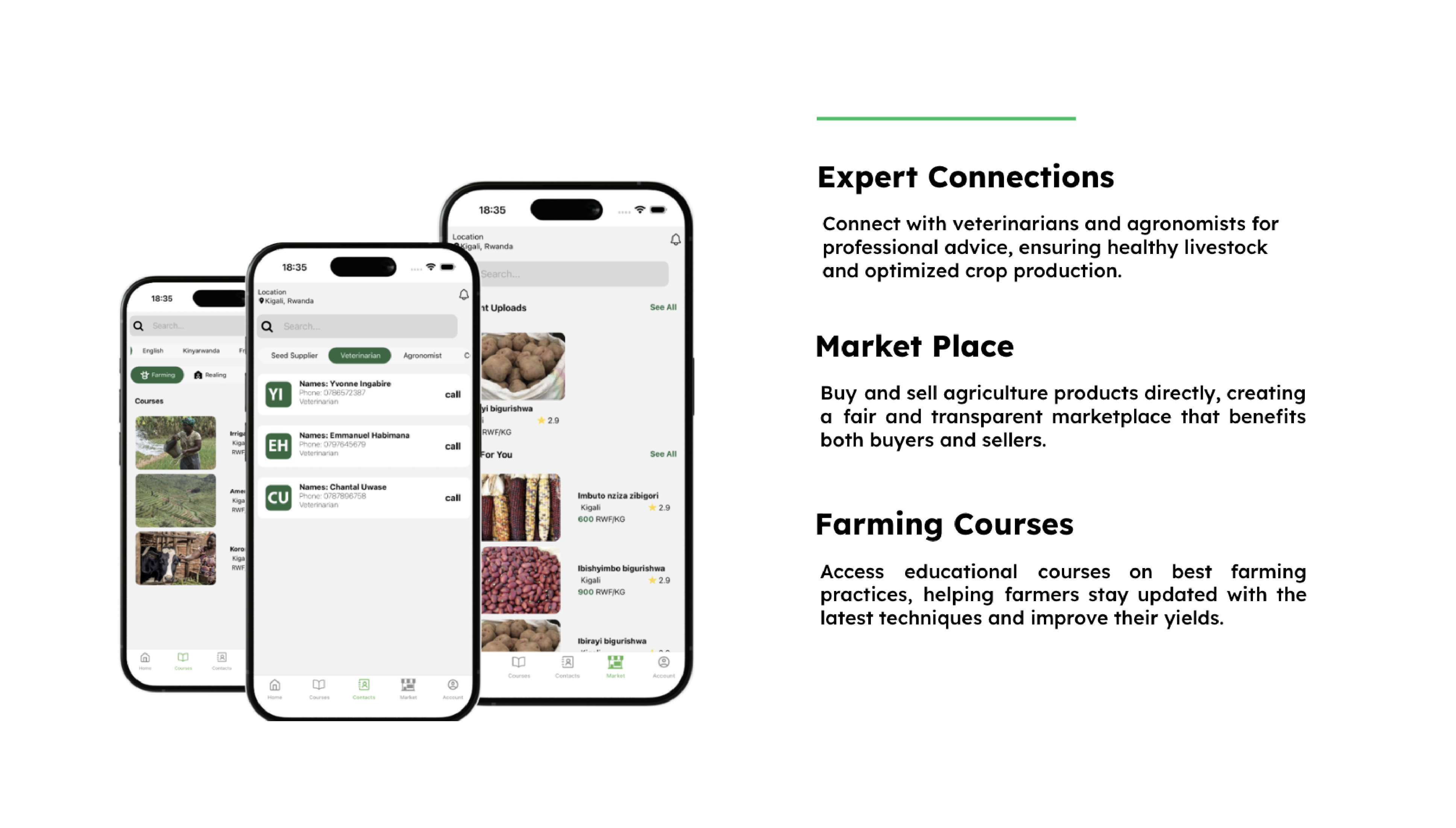
    AgriAid is a comprehensive mobile application designed to address the multifaceted challenges of climate change in agriculture. By leveraging advanced technologies and data-driven insights, AgriAid empowers farmers with the tools, knowledge, and support needed to adopt climate-smart practices, enhance resilience, and achieve sustainable growth.

    Key Features:
    Climate and Weather Forecasting: Provides real-time, location-specific weather updates and climate alerts to help farmers plan and mitigate risks. Sustainable Farming Practices: Offers best practice guides, crop rotation plans, and pest management strategies to promote eco-friendly agriculture. Decision Support Systems: Includes planting calendars, AI-driven pest and disease identification, and customized recommendations for crop management. Community and Knowledge Sharing: Facilitates farmer forums, expert consultations, and access to educational resources for continuous learning and support. Market Access and Information: Provides real-time market prices, supply chain transparency, and a platform for buying and selling agricultural products.

    Implementation Strategy:
    AgriAid will be tailored to the specific needs of Rwandan farmers, with localized content, language support, and partnerships with local organizations. The app will feature a user-friendly interface, offline functionality, and training programs to ensure widespread adoption and effective use.

    Impact:
    AgriAid aims to transform the agricultural landscape by enabling farmers to make informed decisions, improve productivity, and adopt sustainable practices. By addressing the critical challenges posed by climate change, AgriAid will enhance food security, promote environmental sustainability, and improve the livelihoods of farmers in Rwanda and beyond.

    Conclusion:
    AgriAid is not just an app; it is a comprehensive solution for sustainable agriculture in the face of climate change. By integrating cutting-edge technology, practical knowledge, and community support, AgriAid empowers farmers to build a resilient and sustainable future."

// Get In Touch

Please Fill Required Fields

Please Select Subject

Security code does not match !

Please enter a valid email address. Exp. [email protected]

Please enter a valid phone number.Exp. +998991774433

Your message has been sent. We will contact you as soon as possible.